Compact DeLuxe Downloads & RevenueCompact DeLuxe · App Store
Not in any tracked top chart right now.
Updated 5 Nov 2026 · rankings refresh through the day
DeveloperGenuine Soundware
CategoryMusic
Price199.00 SEK
Released
Rating★ 0.0 (0)
Version1.0.1
Age rating4+
First seen by us 22 Oct 2026
Full timeline · 3 events in the last 12 months
- 🆕Compact DeLuxe first spotted by AppInsider#50 in Top Paid · All Apps · Sweden
- 🆕Compact DeLuxe: its developer released another app: GSi Piano Studio
- 🆕Compact DeLuxe released on the App Store
Collected from the stores by AppInsider since we first spotted the app. Dates are when we saw each change.
Rating
0.0 ★
0 ratings
Measured
Compact DeLuxe on the App Store
App details
App ID
1659532972
Publisher
GSi di Guido Scognamiglio
On the store since
Mar 2023
3 years on the store
Minimum OS
iOS 9.3+
iPhone 4s and later
Devices
iPhone · iPad
Universal purchase
Content rating
4+
Size
7 MB
Also listed in
Productivity
Where it ranks now
Every top chart it appears in across 30 countries.
| Country | Charts | Rank |
|---|---|---|
| Not charting right now. | ||
Ratings
App Store, worldwide.
Rating
0.0 ★
0 ratings
Measured
Ratings
0
Measured
About Compact DeLuxe
Please note: This App comes with an AUv3 plugin extension.
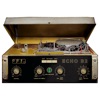
GSi Compact DeLuxe is a component modeling emulation of a Farfisa Compact DeLuxe.
INSTRUMENT BACKGROUND
Among the many transistor organs of the past, also known as "Combo Organs" (mostly because some of them also had a rhythm section and built-in speakers), the Farfisa Compact DeLuxe, along with its big brother the Compact Duo, was one of the most used organs at least in the european beat scene of the early and mid seventies. The electronic circuit of this kind of organ is relatively simple, at least on paper: rather than using a mechanical tone generator like the tonewheel models (Hammond and Pari), the transistor organs used a circuit called "Top Octave Synthesizer", TOS for short, responsible of the generation of 12 waveforms, one for each note of the last octave of the organ keyboard. The basic waveform was usually something halfway between a ramp and a triangular. The lower octaves were produced by means of "divider" circuits that could halve the frequency of each waveform, going so forth for each lower octave down to the pedalboard tones. At each division, something was lost and something was gained in terms of harmonic content. The result was that the same notes of different octaves had oscillators perfectly in sync, so all C notes were in sync, all C#, all D and so on. This same technique was also used in so-called "string machines" or "stringer keyboards" that emulated orchestral sounds (violins, trumpets, etc.) - see GSi's Electrorchestra.
The various registers in combo organs were produced by passing the raw waveforms through a filter bank, so some waveforms were low-pass filtered for bass-like sounds, some were high-pass filtered for violin-like sounds, etc. and some waveforms also went through more than one filter. This also adds some level of phase shifting between waveforms coming from different registers, the reason why the sum between, e.g. a Flute 8' and a Violin 8' isn't exactly the superimposition of the two waveforms, but something slightly different. And this is one of those underrated details that made the sound of some Combo Organs pretty unique.
The sound engine of GSi Compact DeLuxe is also included in the GSi Gemini as well as in the Crumar Mojo 61.
Of course this type of instrument gives its best if run through external effects and amps. Have a look at the GSi catalog and experiment with some of the effects offered by GSi.
Main features:
- Component Modeling engine (no samples, all real-time synthesis)
- Full Polyphony (61 notes, 12 Top-Octave Oscillators + Frequency Dividers)
- Key multi-contact simulation with authentic and adjustable key click
- Authentic recreation of the Farfisa register filters
- Recreation of the background noise and leakage
- Adjustable vibrato (speed and depth)
- Built-in Stereo Delay effect
- Built-in Stereo Reverb effect
- Built-in programmer with unlimited Programs
- Embedded user's manual
- Available as Stand-alone applicat
Latest updates
1.0.1
Fixed keyboard layout issue with bigger iPads
Added compatibility with iPhone